


The future of recruiting: digital auditions and video pre-screening
Cutting costs without sacrificing quality: what really works about the digital, and what does not
In this article
Orchestral recruiting is changing
For decades the model was the same: publish the call, gather applications, hold an in-person audition with every candidate. A costly system for orchestras — logistics, panels, time — and for candidates: travel, lodging, days off work. An inefficiency accepted because there seemed to be no alternative.
The pandemic accelerated the adoption of digital tools: many orchestras tried video pre-screening, hybrid auditions, remote assessment. Once the emergency passed, some of those innovations stayed — not all, and not by chance. Understanding which ones work, and why, is the theme of this closing instalment.
Video pre-screening: what it is and how it works
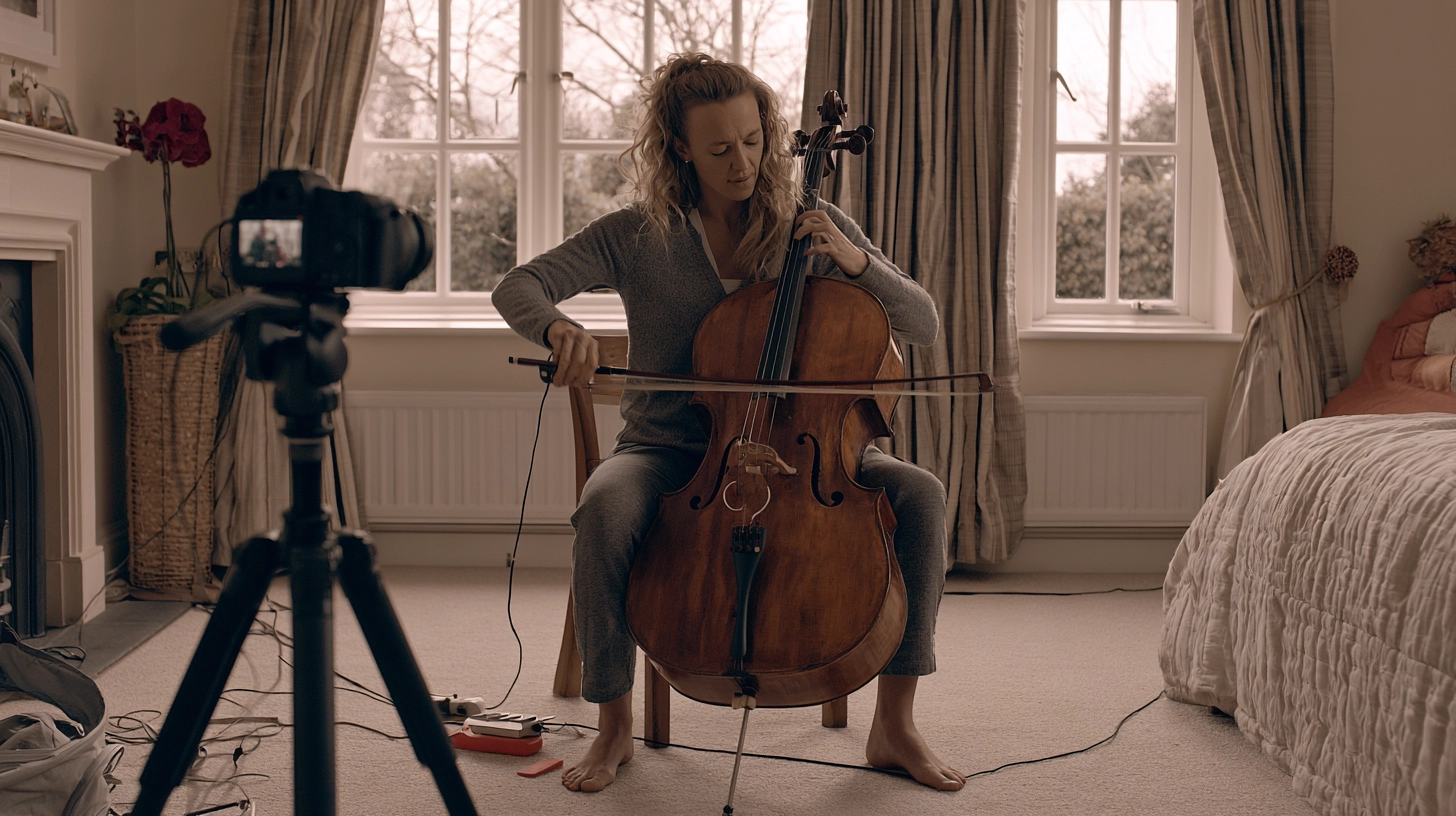
Video pre-screening is a preliminary stage in which candidates send recordings of the required repertoire; the panel assesses them and invites only the most promising to the in-person stage. The typical flow is linear: the orchestra publishes the call with the video requirements, candidates record the requested pieces and submit them by the deadline, the panel selects who advances, and the chosen ones take part in the live audition.
The advantages
For candidates: drastically reduced costs (only finalists travel), the chance to send their best performance, no last-minute travel stress. For the orchestra: fewer candidates to handle in person, more time to assess each one (you can re-listen), a wider pool (those who could not travel still take part).
The drawbacks
Audio/video quality varies enormously; stage presence and stress management cannot be judged; there is a risk of "polished" recordings; technical infrastructure is needed for the files; and some candidates who excel live come across less well on recording — and vice versa.
When to use it (and when not to)
Pre-screening is not a universal solution: it is a tool that pays off in some situations and complicates others. The main dividing line is the number of expected applications.
It works well for…
- Auditions with many expected candidates: with 50+ applications, it cuts the numbers to a manageable in-person amount (15-20).
- Roles that attract international candidates: for principals or scarce instruments, it lets people take part without an excessive initial investment.
- Junior positions: the young have fewer resources; cutting participation costs widens the pool.
It works less well for…
- Auditions with few candidates: with 10-15 applications, it adds complexity without real benefit.
- Roles where stage presence is decisive: solo principals, section leaders. Better judged live.
- Orchestras without technical resources: handling dozens of files takes organisation; without it, the process turns chaotic.
Technical specs and assessment
If you decide to implement it, clarity of requirements is everything. On video: minimum 720p resolution (1080p preferable), MP4 or MOV format, a stated maximum size, a full-figure frame with instrument and hands visible. On audio: recording in a quiet room, no post-production (equalisation, artificial reverb), audio synced with the video. On content: specify exactly the pieces and excerpts required, the order of performance, any cuts allowed and whether a continuous performance is needed. On submission: a link for the upload, a precise deadline and a receipt confirmation.
Assessing recordings calls for a different approach from the live one. Some elements stay legible — intonation, rhythm and precision, sound quality (within the medium's limits), interpretive choices, visible technique; others escape almost entirely: sound projection in the hall, handling live pressure, interaction with the panel, flexibility. The operational rule is to listen to each video at least twice, use a standardised grid, not let the recording's technical quality sway you, and assess separately first and then by comparison. The best 30-40% of applications are selected for the in-person stage, for a manageable number of 15-25 finalists.
Fully digital auditions: do they work?
During the pandemic some orchestras ran fully online auditions, with candidates playing live over Zoom or similar platforms. The experiment showed severe, structural limits that no better software can get around.
Why a live stream is not enough
- Audio latency makes it impossible to judge real timing.
- Compression degrades sound quality.
- Technical problems (connection, audio, video) are frequent.
- Sound projection in the hall is impossible to assess.
The verdict is clear: fully digital auditions are an emergency measure, not a permanent solution. Video pre-screening works as a filter, but the final decision requires presence. The only reasonable exception is urgent temporary roles or last-minute covers, where a live video audition can be acceptable as a pragmatic choice.
The hybrid model: best practice
The likely future is neither all-analogue nor all-digital, but hybrid: the digital filters, presence decides. Four stages, each with its role.
The hybrid model's added costs are real — time to define requirements, infrastructure to receive files, panel hours to assess videos — but they are more than offset by the savings: fewer candidates in person (rooms, logistics, time), shorter and more focused auditions, fewer "tourist" candidates taking part without real prospects. To this are added the qualitative benefits: a wider pool, more time per candidate, and finalists who arrive already pre-qualified. For auditions with 40+ expected candidates, the hybrid model is almost always worthwhile.
The technology on the horizon
Several innovations are taking shape, at very different levels of maturity. Dedicated platforms — software to handle uploads, integrated assessment and automated communication — are already a partial reality and will grow. Artificial intelligence could support pre-selection (analysing intonation and rhythm): controversial and far from reliable for final decisions, but plausible as an initial filter. Virtual reality, with environments simulating a hall's acoustics, is still immature but potentially interesting. Blockchain, finally, could certify the authenticity of recordings, answering the "polished video" problem.
None of these technologies will replace the in-person audition in the short term. But they will complement and improve the process.
What to do today, and the end of the series
To modernise recruiting without chasing fashions: assess whether pre-screening is for you (under 25 applications probably not, over 40 yes), define a clear process and test it internally before launching, communicate transparently how it works, keep promotion wide — the filter only helps if there is enough to filter — and after each audition learn and adapt.
Across twelve instalments we have crossed orchestral recruiting from every side: quality versus quantity, timing, multichannel distribution, international talent, the cost of a vacant position, segmentation by instrument, data, social media, temporary roles, post-audition communication, partnerships with conservatoires and, today, the digital. The common thread is one: recruiting is not publishing a call and waiting, but a strategic process made of planning, communication, intelligent use of data and relationships built over time.
Orchestras that invest in this process find the right musicians faster, spend less and build a reputation that attracts the best talent. The rest is up to you.
