







Partnerships with conservatoires: building a steady flow of talent
From reactive search to ongoing relationship: training agreements and early identification of candidates
In this article
The problem with reactive search
Orchestras that look for musicians only when a position opens start at a disadvantage. The process is entirely reactive: you publish the audition, wait for applications, hope the right profile is among them. It is a model that works while the market is favourable, but it leaves the orchestra at the mercy of whoever, at that precise moment, decides to come forward.
More structured orchestras work differently. They build ongoing relationships with training institutions, identify talent before it enters the market, create a steady flow of qualified candidates. The strategy takes an investment over time — more time than money — but it cuts the risk and cost of individual auditions, turning the search from a recurring emergency into a continuous process.
Orchestras that start building relationships with conservatoires today will have a competitive edge in two or three years.
Why conservatoires are strategic partners
Conservatoires are the entry point to the professional market: every year they graduate hundreds of string players, many of whom will look for an orchestral position. They are, literally, the source of the pool every orchestra draws on. But the partnership works only when both sides gain value — and it is precisely this reciprocity that makes it solid over time.
Benefits for the orchestra
Early access to emerging talent, a direct relationship with teachers (who know their students), the chance to influence preparation in orchestral repertoire, visibility as a desirable employer, candidates already "pre-screened" by the academic path.
Benefits for the conservatoire
Professional outlets for graduates, a connection to the real working world, training opportunities for students (masterclasses, internships), prestige from the placement of its graduates.
The forms of collaboration
The partnership is not an abstract idea: it takes shape in precise activities, scalable to the orchestra's resources. They range from the zero-cost gesture to the structured commitment.
Five ways to collaborate
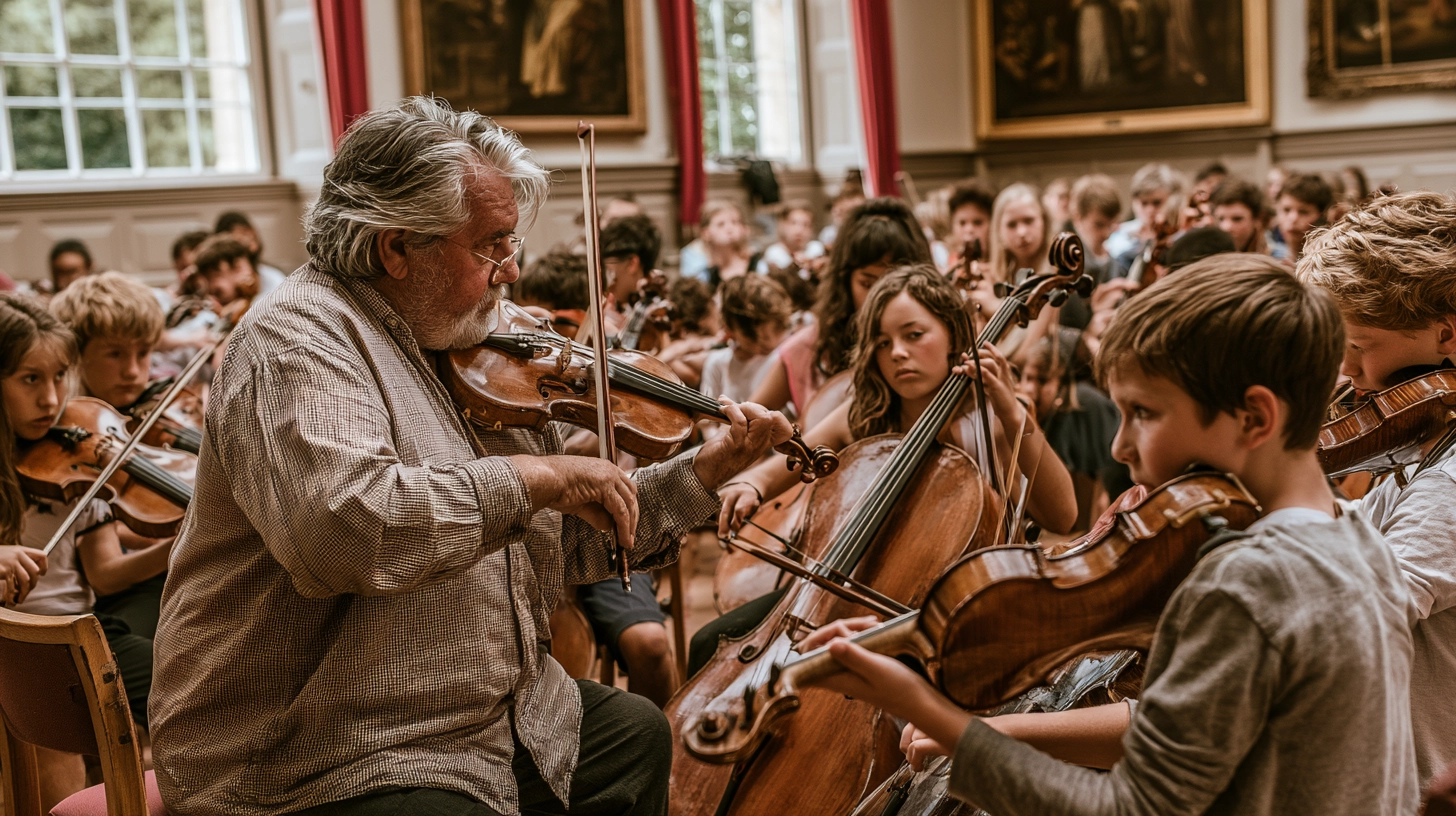
- Masterclasses and seminars: the orchestra sends principals to teach at the conservatoire (1-2 times a year). Modest investment, high return in visibility and talent spotting.
- Internships and placements: advanced students take part in rehearsals and concerts as observers or extras. Always define the role and conditions clearly (internship law varies).
- Open rehearsals and visits: invite classes to attend rehearsals. Zero cost, exposure to real work, familiarity with the institution.
- Joint projects: "side-by-side" concerts, educational productions. They take planning, but build strong bonds.
- Direct communication: when an audition opens, inform the relevant teachers in addition to standard publication.
On this last point, dbStrings reaches around 5,000 conservatoire teachers through its newsletter: a channel that complements — does not replace — direct communication between orchestra and conservatoire, widening the reach of the tip-off.
Identifying talent early
The heart of the proactive strategy is observing students before they graduate, spotting the most promising and keeping in touch over time. Concretely: attending students' final recitals and concerts, asking for tips from the teachers you have a relationship with, following youth competitions (where much talent emerges for the first time), keeping track of the students met in masterclasses.
All this feeds into an archive of emerging talent, similar to the one for unselected candidates but future-oriented: name, instrument, conservatoire, expected graduation year, preliminary assessment, notes on strengths and a contact. There is, however, a decisive caveat on timing: a second-year student is not ready for an orchestral audition. Early identification serves to spot, not to recruit prematurely. The contact is kept over time and the opportunity offered when the candidate is ready.
Building relationships with teachers
Conservatoire teachers are the key figures for accessing talent: they know their students better than anyone, they know who is ready for the market and who needs time. The relationship with them is the partnership's real capital — and it must be cultivated with care, not exploited.
What to do
Introduce yourself (by email or at industry events), propose concrete collaborations, keep in touch over time — not only when you need something — and give feedback on former students who took part in auditions.
What to avoid
Getting in touch only when an audition is urgent, asking for "recommendations" that put the teacher in a difficult spot, ignoring their feedback on their own students, treating the relationship as purely transactional.
The rule is simple: the relationship works if it is genuine. Teachers gladly flag opportunities to their students when they trust the orchestra — and that trust is built through continuity, not through last-minute requests.
Which conservatoires to prioritise
Not all conservatoires deserve the same investment. Four criteria help focus energy: geographic proximity (students from the region tend to stay local, and the logistics are simple), the quality of training for specific instruments (some institutions have targeted traditions of excellence), the volume of graduates, and existing relationships (if an orchestra musician studied there, an access channel already exists to use).
That these agreements work is not theory. An Italian regional orchestra, with two annual masterclasses and direct contact with teachers, filled three positions in five years with graduates of the city conservatoire, cutting the average time to fill by 30%. A medium-sized German orchestra, with a structured internship programme (four students per season, three months each), sees 40% of its interns recalled for auditions in the following three years, with two direct hires after the placement.
Measuring and integrating with promotion
A partnership makes sense if it produces measurable results. There are four metrics to monitor: the number of applications from students and graduates of partner conservatoires, the average quality of those candidates, the time to fill positions (does it shorten with an active flow?) and the cost per hire, which must include the partnership investment. If after two or three years the collaboration is not generating quality applications, it is time to reassess it.
One point must be clear, though: relationships with conservatoires do not replace audition promotion, they complement it. When a position opens, the full flow is: contact the candidates in the talent archive, inform the teachers at partner conservatoires, publish the audition on dbStrings to reach the wider market and, if needed, activate ADVplus for scarce instruments. The relationships provide "warm" candidates, already known; the promotion guarantees breadth of choice. Together they cover what neither covers alone.
Operational conclusion
Partnerships with conservatoires build competitive advantages over time: identify 3-5 priority conservatoires for your orchestra, propose concrete collaborations (masterclasses, internships, open rehearsals), build personal relationships with key teachers, keep an archive of emerging talent and integrate the flow from institutions with standard audition promotion.
The investment is modest — more time than money — and the results show in the medium term. Those who start today reap in two or three years.
