







The psychology of the young competitor
Decision timing and motivations: how and when young musicians choose a competition

In this article
The competitor's mind: three phases, three windows
Two competitions for young violinists. Same period, similar prizes, juries of comparable standing. The only real difference is when, and how, they communicated.
Competition A: call 150 days ahead
Steady communication, content about the repertoire, videos of past winners.
- Entries: 127
Competition B: call 45 days ahead
A launch post, then silence until the deadline.
- Entries: 34
The difference is not in the quality of the competition. It is in understanding how young musicians make decisions — a process that unfolds over months, even if the enrolment itself takes a few minutes.
Our data reveals a consistent pattern in enrolment behaviour, in three distinct phases.
Phase 1: Discovery (120-90 days before)
The young musician gathers information. They browse dozens of competitions, save the interesting ones, talk about them with their teacher. They do not decide: they build their set of possibilities. Whatever does not enter that set now simply will not exist when the time comes to choose.
Phase 2: Evaluation (90-30 days before)
They compare required repertoire, costs, dates, prizes, jury. They look for online feedback from past participants, ask for advice, start preparing. The decision, in fact, matures here — but it stays invisible, because it does not yet turn into an entry.
Phase 3: Enrolment (last 20 days)
71% of entries arrive in the last three weeks. Urgency kicks in: a decision already made in the mind is formalised under deadline pressure. Whoever looks only at this number concludes, mistakenly, that communicating in the final month is enough.
The decision is made in Phase 2, but the action happens in Phase 3. Whoever is absent in Phase 1 does not exist in Phase 2. And whoever does not exist in Phase 2 receives no entries in Phase 3.
Age changes everything
An eighteen-year-old and a twenty-six-year-old do not decide in the same way, and neither does the same person across the years. With age, the one holding the pen changes — the family, the teacher, the musician themselves — and so does the currency by which the competition's value is measured.
Under 16: the decision is a family one
Parents and teacher assess it together. The key factors are logistical safety, contained costs, educational value. Cash prizes matter less than the experience, because the one who pays is not the one who plays. Long decision window: 4-6 months.
16-22: the decision is academic
The conservatory teacher is the main influencer. What counts is the repertoire (compatible with the study programme), the jury (names that matter for that instrument), networking with peers. It is the age at which the competition is read as a step in a path, not as an isolated event. Medium window: 2-3 months.
23-30: the decision is professional
The young musician decides independently, and reasons like a professional: every competition is an investment of time that must produce a return. What counts is the career-building prize (concerts, recordings, contacts), international visibility, prestige that can be spent. Short window: 4-8 weeks.
Competitions that speak the same way to every age group lose precision. A message built on the cash prize leaves a sixteen-year-old indifferent — their parents are looking for safety; a message about educational value does not move a twenty-five-year-old, who is after a career return. Speaking to everyone, indistinctly, means speaking to no one in particular.
The teacher as gatekeeper
In the 14-22 bracket, the instrument teacher controls access. 68% of under-22 participants cite their teacher's advice as the decisive factor: not advertising, not social media, not the website, but a trusted person saying "This competition is right for you".
The reason is economic as much as human. For a young person, assessing a competition is costly: it takes time, the expertise to judge the jury's standing, the ability to estimate one's own chances. The teacher cuts all these costs in a single sentence. They are a trusted intermediary, and trust is worth more than any advertisement. Competitions that build relationships with teachers therefore gain a structural advantage:
- Inviting teachers onto the jury: each teacher brings on average 3-4 students. The jury is not only an assessment body, it is also a distribution channel.
- Communicating with string departments: not generic messages, but information useful to the teacher (full repertoire, assessment criteria, educational experiences included), so they can pass it on to the right students.
- Offering written jury feedback to all participants: teachers value the educational function and remember it the following year, when they advise the new intake.
The hidden motivations

The cash prize is the stated motivation. It is rarely the real one. It is the tip of the iceberg: visible, easy to communicate, but small compared with what lies beneath. Post-competition questionnaires reveal five recurring motivations, almost all tied to identity and growth rather than to the prize money:
The five real motivations
- Validation: "I want to know where I stand", by an external yardstick, independent of the usual teacher.
- Stage experience: managing adrenaline, playing under pressure, simulating the conditions of a real audition.
- Networking with peers: meeting equals from other countries and building contacts that will last.
- Authoritative feedback: one sentence from a recognised soloist is worth more than months of lessons.
- Building the CV: even "semi-finalist" or "finalist" has value. For someone in their twenties, every line counts.
Competitions that communicate only the cash prize speak to a single motivation — and not even the dominant one. Those that highlight the educational experience, the quality of the jury and the networking opportunities speak to all five, and multiply the reasons to enrol.
The enrolment curve
The chart of entries over time has a characteristic shape: flat for weeks, then a final surge. Out of 100 entries, the typical distribution is:
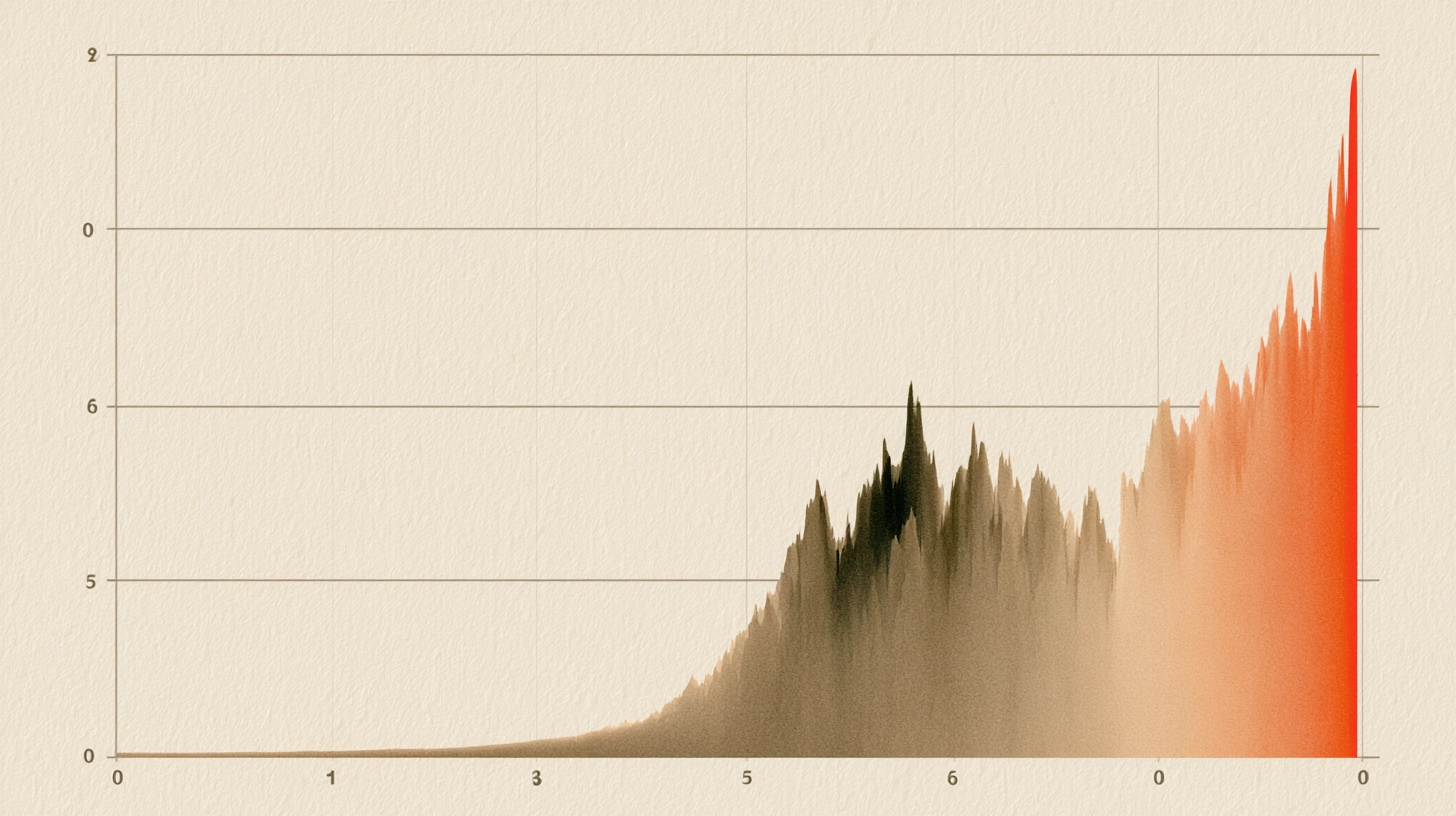
The final surge is deceptive: it looks like procrastination, but it is the opposite. The competitor is not putting the decision off, they are completing a process that takes weeks. They have to check compatibility with other commitments (concerts, exams, other competitions), prepare the required repertoire, get the teacher's approval, organise logistics — travel, accommodation, a chaperone — and raise the funds for the fee and expenses. The deadline is simply the moment all this concludes. And it is precisely because the process is long that the competition must be present from the start: the last-week entry is the consequence of a discovery made three months earlier.
Communication that follows the mind
An effective communication strategy does not fight the three phases: it follows them, giving each what it needs.
Phase 1 (120-90 days): awareness
Goal: get on the radar and be saved among the possibilities. Content: presentation of the competition, video of the previous edition, jury profiles. Informative tone, not urgent. Channels: social media, specialised Facebook groups, newsletters to conservatories.
Phase 2 (90-30 days): deepening
Goal: make evaluation easier, because this is where the decision truly matures. Content: repertoire details, interviews with past winners, practical information. Useful, service-oriented tone. Channels: emails to those who already viewed the page, instrument-targeted posts.
Phase 3 (last 30 days): conversion
Goal: turn an already-made decision into an entry. Content: countdown, last places (if true), testimonials of satisfied participants. Urgent but not aggressive tone. Channels: reminder emails, posts with a visible deadline.
Competitions that concentrate all communication in Phase 3 arrive late not out of laziness, but out of a flawed model: they think they have to persuade, when in Phase 3 you can only collect. The decision was already made — or not made — weeks earlier.
The role of parents
For under-16 competitors, parents are co-deciders. Ignoring them is a mistake, because in this bracket there are two "buyers" with different concerns, and a message that speaks only to one leaves the other in doubt.
The young person thinks
What repertoire must I prepare? Who is on the jury? Can I win?
The parent thinks
Is it safe? How much does it cost? Who accompanies my child? Is it worth missing school?
Answering both is not a cost, it is a measurable investment. Competitions with an "information for families" section (logistics, safety, transparent costs, other parents' experiences) see a 23% rise in under-16 entries. And a dedicated email to parents after enrolment, with a practical checklist and emergency contacts, reduces last-minute withdrawals by 31%: reassuring the one who pays is the most effective way not to lose the one who plays.
The timing of publication
When to publish the call depends on the target age group, because each group has a different decision window and must be reached before it closes.
Recommended lead time by age group
- Under-18 competitions: at least 150 days ahead. Families plan well in advance, schools need notice for absences, teachers fit the competition into the study plan.
- 18-25 competitions: 120 days. Conservatory students have flexible calendars but must coordinate with exams and recitals.
- 25+ competitions: 90 days. Professionals decide quickly but have full schedules: too much lead time risks them forgetting, too little that they are already booked.
The general rule: better too early than too late. Publishing 150 days ahead captures every group; publishing at 60 days loses the under-18s and part of the students. The price of haste is concrete: a call released 40 days before the deadline brought 28 entries instead of the expected 70, because the best candidates had already committed that period, teachers had no time to advise and families could not organise. And the damage does not end with one edition: a competition perceived as weak or improvised struggles to rebuild trust for years, because reputation, in the small circuit of competitions, travels fast.
Tomorrow's ambassador
A young musician who takes part in a competition at 17 will remember the experience for years, and that memory will have consequences far beyond the edition. If it is positive — flawless organisation, respectful atmosphere, useful feedback — they will enrol again while still eligible, recommend it to colleagues and talk about it to their own students once they become teachers, turning into the very gatekeeper we discussed. If it is negative — chaos, a jury perceived as unfair, no feedback — they will do the opposite, and just as effectively, for the next twenty years.
Today's competitor is tomorrow's ambassador, or detractor. Every interaction counts.
